

Whoa! I remember the exact moment—my wallet extension asked to approve a contract I did not recognize. Panic, quick alt-tab, heart racing. I clicked cancel. Good call. But then I sat there, wondering if all browser wallets were just ticking time bombs. Something felt off about how we talk about wallet security. My instinct said: there’s got to be a middle ground between total paranoia and careless convenience. Initially I thought all extensions were roughly the same, but then I dug into one that changed my view.
Okay, so check this out—browser extension wallets can actually be usable and safer when built with UX that understands human error, and security defaults that assume you will mess up (because you will). Seriously? Yes. On one hand wallets need to be frictionless for DeFi power users. On the other hand, they must protect newcomers from wallet-draining mistakes. It’s a hard balance, though actually not impossible.
Here’s what bugs me about many solutions: flashy features with weak safeguards. I’m biased toward products that prioritize explicit consent and visibility. I used a handful of popular extensions. Most felt clunky or too clever by half. Then I tried something that handled permissions, network switching, and token approvals in ways that made my daily flow feel safer, not slower.
Let me be frank—I’m not a security purist. I still like convenience. But convenience that leads to loss is not convenience; it’s a trap. My working assumption: if a wallet can reduce accidental approvals and make signing intent crystal clear, it’s worth adopting. I want to tell you about practical guardrails, real UX patterns that matter, and why a particular extension grew on me fast.
What actually matters in a browser extension wallet
Short answer: three things. Clear transaction context. Permission granularity. Fast recovery options. Long story: the extension should show the exact contract address, human-readable purpose, and an estimated gas or failure risk right when you sign. That’s where many wallets fail—they hide the messy details behind simplistic prompts, and then you’re stuck approving somethin’ you don’t fully understand.
Fine print matters. Really. Wallets that surface approval scopes (exact token amounts vs. infinite approvals) and let you edit them inline save people from phishing-style drains. I appreciate designs that make „infinite approval” an explicit, uncomfortable choice—because it should be uncomfortable. Initially I thought users wouldn’t bother changing defaults, but then I watched a friend opt out once the prompt made the downside obvious. That moment stuck with me.
On the analytics side, having a clear transaction history with signature hashes, timestamps, and the ability to view the call data (or at least a plain-language summary) helps forensics when something goes sideways. If you ever have to tell a support team what happened, that context is gold. (Oh, and by the way—backup phrases should be handled like radioactive material: sealed and respected. No screenshots. No cloud copies unless encrypted properly.)
Why this approach made me recommend rabby wallet
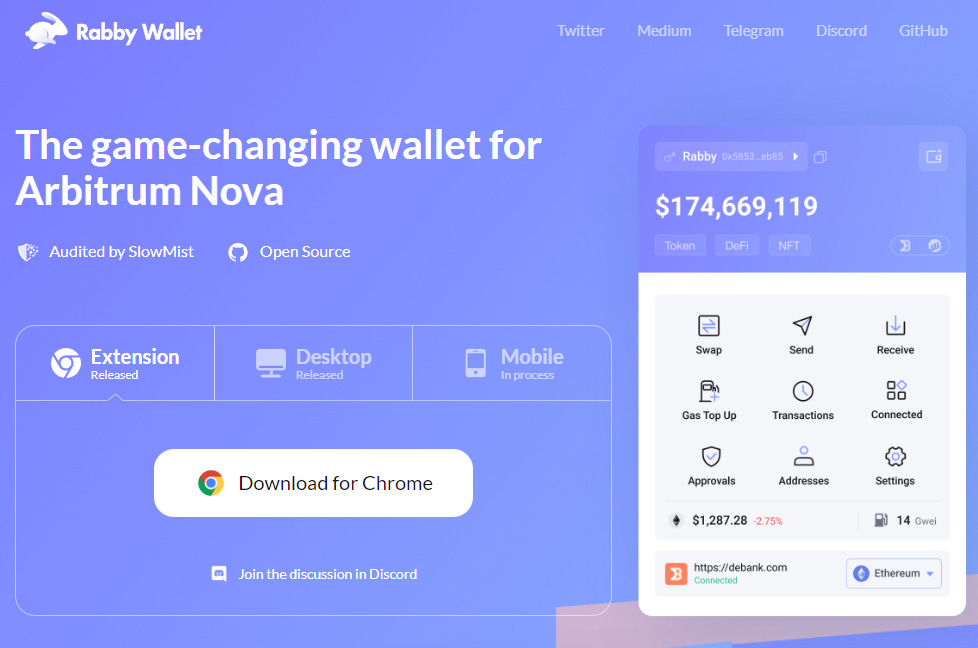
After trying several options, I started using rabby wallet because it aligned with those guardrails in a thoughtful way. My first impression was: clean UI, but not at the expense of important details. My instinct said—this one might actually nudge users to safer behavior instead of tricking them into it. The approval UX shows token allowance clearly, switching networks prompts are contextual, and the account management tools make it easier to segregate funds for different risk levels.
Hmm… I’ll be honest: I still had doubts. Could an extension really deliver on both security and speed? But the more I used it the more those doubts faded. For example, I set up separate accounts for trading and staking. When I interacted with a new contract, the wallet would highlight if a contract was requesting more than a single-use approval and let me change that scope. Small, practical things like that add up.
There were times when I expected friction—like when interacting with obscure testnets or odd RPC endpoints—but the extension’s prompts were educational rather than annoying. It explained why a chain switch mattered, and gave me one-click ways to audit or ignore nonstandard requests. This isn’t magic. It’s smart defaults plus clear language. And yes, some parts still feel rough around the edges. Nothing’s perfect. But it’s a rare extension that respects both security and usability without being preachy.
One caveat: browser extensions are still an attack surface. Keep your OS and browser up to date. Use hardware wallets for truly large holdings. Backups are nonnegotiable. But for daily DeFi interactions—trading on DEXs, yield farming, minting NFTs—an opinionated, safety-first extension makes mistakes less catastrophic.
Practical tips for using a browser extension wallet safely
Quick, usable tips that I actually use:
- Limit approvals: set approvals to a single-use or minimum amount whenever possible.
- Segregate funds: maintain separate accounts for high-frequency trades and long-term storage.
- Audit approvals: check the contract address and call data if you’re unsure—copy-paste it into a block explorer.
- Use a hardware wallet for big moves and link it to your extension when you need to sign.
- Keep one recovery phrase offline and hidden; consider a metal backup if the funds matter.
These steps are not foolproof, but they reduce risk a lot. And honestly, implementing them is easier when your wallet makes the right choices obvious. That’s why the UX matters so much—it changes behavior.
FAQ
Is a browser extension wallet as safe as a hardware wallet?
Nope. Hardware wallets offer stronger isolation of private keys. However, a well-designed extension can be sufficiently safe for everyday DeFi activity if combined with best practices like limited approvals, account segregation, and cautious network switching. For large holdings, pair the extension with a hardware device.
How do I know if a transaction prompt is malicious?
Look for mismatched contract addresses, unexpected approval amounts (especially infinite approvals), strange gas or execution warnings, and unfamiliar RPC requests. If a prompt feels off, pause. Check the dApp URL, verify contract addresses on a block explorer, and when in doubt, reject the request and revisit the trade manually from a trusted interface.
